miércoles, 10 de diciembre de 2014

KARST TOPOGRAPHY


In essence, karst topography is any region where the terrain has been dissolved by the physical and chemical weathering of the bedrock. These areas are composed of carbonate rocks, such as dolomite and limestone, or have a high concentration of evaporites, such as salt and gypsum, because these materials tend to be highly soluble in water. This high solubility causes the parent material to be highly susceptible to chemical weathering.

Groundwater is typically slightly acidic and reacts chemically with subsurface rocks, especially those made up of highly soluble limestone. Surface flows in these areas are broken up by water being channeled into and underground system and flowing underneath the surface. At times this underground flow can remerge and continue above ground. Also large cave formations can appear in karst topography.


Canyon:  is a deep ravine between pairs of escarpments or cliffs and is the most often carved landscape by the erosive activity of a river over geologic timescales. Rivers have a natural tendency to cut through underlying surfaces so will eventually wear away rock layers to lessen their own pitch slowing their waters; given enough time, their bottoms will gradually reach a baseline elevation—which is the same elevation as the body of water it will eventually drain into. 


Upwelling: is a tube that goes from solid wood, leaving the groundwater that this may have.
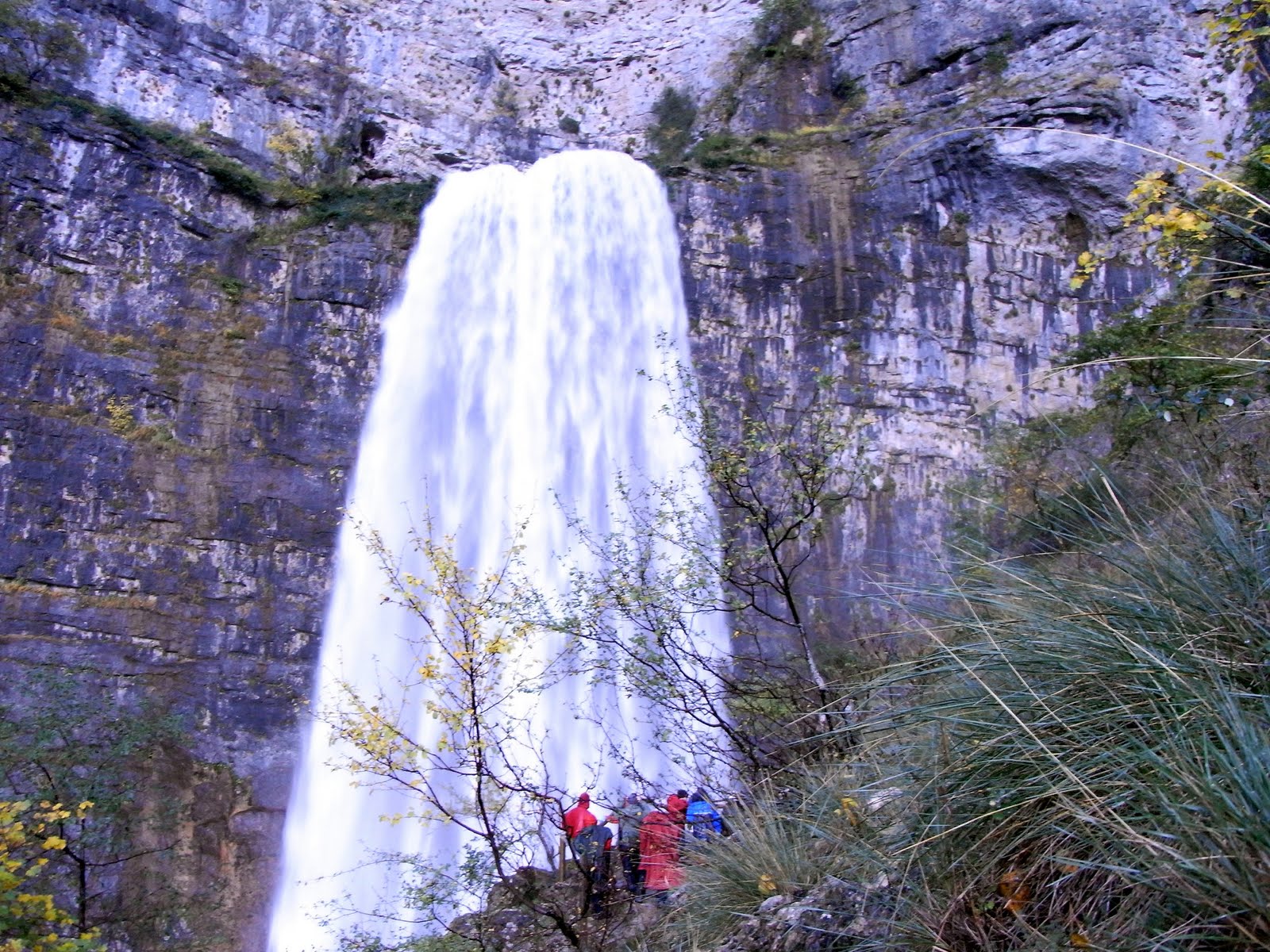

Sinkhole: is a depression or hole in the ground caused by some form of collapse of the surface layer. Some are caused by karst processes for example, the chemical dissolution of carbonate rocks or suffosion processes.


Torcal: are depressions with vertical walls.


Sink: areas through which water filters due to fracture the rocks.

sábado, 6 de diciembre de 2014

GRANITE MODELING 

Domo: granite outcrop erodes shaped dome


Crest: are structures that form when granite decomposes


Spheroidal weathering:  is a form of chemical weathering that affects jointed bedrock and results in the formation of concentric or spherical layers of highly decayed rock within weathered bedrock that is known as saprolite.


La Pedriza: is a geological feature of great scenic and leisure interest. It is located on the southern slopes of the Guadarrama mountain range.

AZONAL RELIEFS

Coastal

Water is the agent that will act more, and the process will be the chemical weathering.

Cliffs: are vertical walls depending on the sea, the cliff is only eroded by the bottom and when is unstable falls, these remains are called abrasion platform.


Beach: is a deposit of unconsolidated sediments ranging from sand and gravel, excluding the mud as it is not an alluvial flat or coastal mangrove, which extends from the base of the dune or the limit where the vegetation ends to a depth where sediment can no longer move.


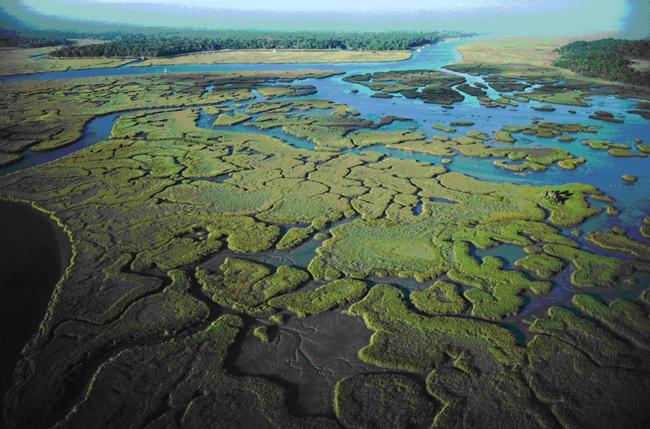
Marshes: basset freshwater flooding area are shallow


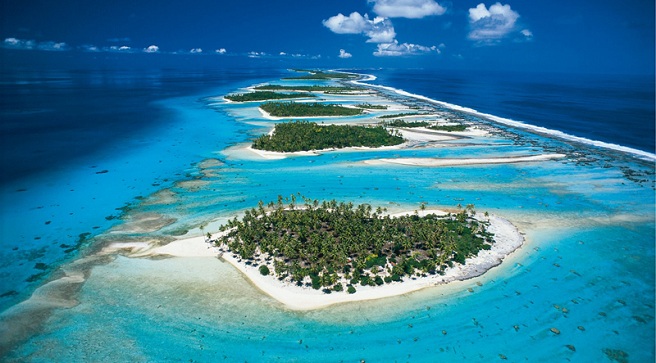
Atoll: are surfaces of coral that has been covered by sand when these have surfaced


MODELING DESERT

These are areas with low amount of rainfall, areas where water is not available.

The predominant agent is the wind, the dominant process is the erosion.

Sebkha: salt lakes with large areas that are completely horizontal.


Tafones: have chemical and mechanical origin, substances react with pollutants and diluted.


Guadies: valleys where water for desert (when it rains)


Mountain island: steep hill slopes and rounded top, usually granite or gneiss, which appears isolated or forming a group that rises above the general level of motion.


Yardans: structures in the desert resistant to erosion


Barjanes: dunes crescent


Mushroom rocks: are formed by erosion caused by wind and sand.


Tipos de desierto

Rocky: the intensity of the air is very high, so that only leaves without eroding the heavier materials.
Stony: the intensity of the air is lower.
Sandy: the air hasn´t got intensity.


MORPHOCLIMATIC SYSTEMS

Glacier 

They are in high areas. 
The temperature must be below zero. The river valleys are V-shaped , and are shaped glacial valleys U. 
The large ice erosive capacity of these materials is due to the dragging . If a glacier melts, the material that has been dragging , stay where they are. 
In the tonge of glaciers lot of fractures appear.

  Parts:
     -Glacier cycle: It's a great depression surrounded by mountains that have accumulated large amount of ice.
     -Glacier tonge: It is a large mass of ice flowing down the slopes of the mountain moved by gravity
     -Ablation zone: In this area the ice melts, rising from the tongue, hard, a stream or river, as the case of the Rhone.

Glacier modeling

The agent acting is ice and more frequent process is the gélifraction.
The scree are rock glaciers (when the glacier disappears, the bedrock that is)
Stone wedges and polygon soils (are typical landscapes of modeling glacier)
Floor cushion (the ground freezes and melt water is aerated and becomes soft and fluffy)
Permafrost (a soil that is permanently frozen)

     
WAYS TO EROSION OF THE SLOPES

Landslides

the materials composing the slopes break and fall by these


Slides

An instance of the land slides On A Surface with lower slip


Streams

inthis case no fracture surface with a bottom


Creeps

Ahillside slowly descends down, this produces some arbos bend because the trunk has shifted from the initial place where they were born


TRANSPORT AND SEDIMENTATION

Selective

Depending on the weight or size of the particles , small be shifted more in the rivers will happen the same, and in the air too, but to a lesser extent , the dissolved materials can be dragged thousands of kilometers . Also , some are moved by impulses , like the songs , which are rounded

Nonselective

In this case , all materials are carried by strong currents of water or air


jueves, 4 de diciembre de 2014


QUIMICAL

Change materials compounds. 

Carbonation

Some substances like CO2 can disintegrate rocks.


Hydration

hydration the clay lose water and fragmentation are created if they are hydrated , increase in volume.


Oxidation

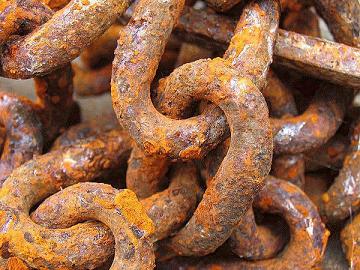
materials combine with dissolved oxygen in the air or water.


Biological

Some organism , produces substances or dilute That weathers rocks, some examples are the urine of dogs or date mussels , which can dissolve the rocks to get into them and withstand the force of the waves.